
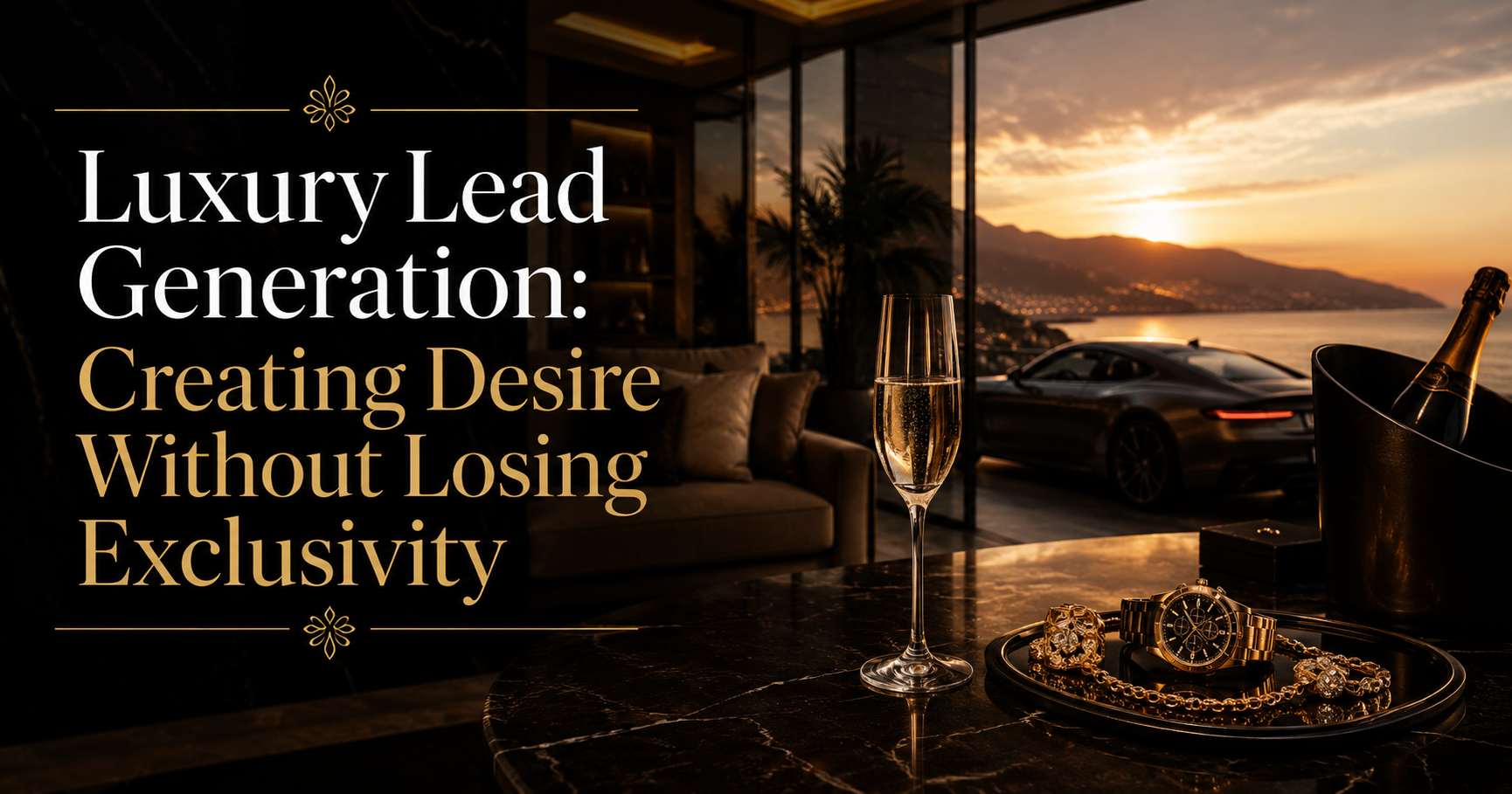
Luxury Lead Generation Is the Art of Selective Desire
Luxury lead generation is not about capturing as many contacts as possible. In fact, too much accessibility can weaken the perception of a luxury brand. The purpose of lead generation in this niche is to identify people with real intent, protect the brand’s sense of exclusivity, and guide prospects into a buying experience that feels personal rather than transactional. Luxury does not sell through urgency alone. It sells through desire, trust, status, taste, and timing.
The biggest mistake luxury brands make is treating lead generation like mass-market performance marketing. A generic discount, aggressive retargeting campaign, or loud conversion pop-up may produce inquiries, but it can also damage brand equity. A luxury prospect does not want to feel pushed. They want to feel recognized. The funnel must be elegant, controlled, and aligned with the emotional value of the product.
Whether the niche is high-end real estate, private travel, watches, jewelry, designer interiors, luxury vehicles, concierge services, art, yachts, or premium hospitality, the lead generation process should begin with aspiration. The first interaction must communicate taste and authority. Photography, copy, page speed, typography, brand language, and the way information is revealed all matter. A luxury lead form is not just a technical element. It is part of the buying experience.
The offer should feel curated rather than promotional. Instead of “Get a quote,” a luxury brand may invite the prospect to request a private consultation, access a limited collection preview, schedule a personal viewing, receive a tailored itinerary, or speak with an advisor. The language changes the psychology of the action. The user is not filling out a form because they are being sold to. They are stepping into a more private layer of the brand.
Qualification should happen smoothly. Luxury businesses need to know whether a lead has the budget, intent, location, timeline, and preferences to justify high-touch follow-up. But asking too many blunt questions too early can feel intrusive. The best funnels collect signals through elegant choices: preferred collection, destination, property type, appointment location, investment range, occasion, or desired level of service. These details help qualify the prospect while making the experience feel personalized.
Content plays a different role in luxury than in other sectors. It is less about explaining basic features and more about building meaning. A luxury watch brand can discuss craftsmanship, heritage, scarcity, and collecting philosophy. A private travel company can create destination stories that show access unavailable to ordinary tourists. A real estate brand can present architecture, lifestyle, neighborhood culture, and privacy. A jewelry house can speak about provenance, design, and emotional significance. The content should make the prospect feel that the brand understands a refined world, not merely a product category.
Paid media can work in luxury, but targeting and creative discipline are essential. Broad campaigns may attract aspirational audiences who engage but never buy. That can be useful for brand awareness, but lead generation requires sharper filtering. Geographic targeting, income proxies, interest clusters, lookalike audiences from real customers, private database retargeting, and high-intent search behavior can improve lead quality. Still, the ad itself must preserve the brand’s tone. Luxury advertising should not look desperate for clicks.
Search behavior is especially valuable because many luxury buyers research quietly before making contact. They may compare neighborhoods, models, designers, investment value, service providers, or ownership requirements. A luxury funnel should answer these questions without making the brand feel ordinary. The best pages combine practical clarity with editorial sophistication. They help the prospect move forward while maintaining emotional elevation.
Speed of response is critical, but the response must feel considered. A luxury lead should never receive a cold, automated message that sounds like a generic CRM template. Even when automation is used, it should be discreet and polished. The first reply should acknowledge the specific interest, confirm that the inquiry has been received, and introduce a human point of contact. For high-value leads, personal outreach from an advisor, consultant, or director can make a measurable difference.
Retargeting in luxury should be subtle. Repeating the same product image across the internet can cheapen the experience. More refined retargeting may show editorial content, private viewing invitations, testimonials from credible clients, craftsmanship stories, or appointment-based calls to action. The goal is to deepen desire, not chase the prospect.
A luxury lead generation system should also protect the sales team’s time. Not every admirer is a buyer, and not every buyer is ready now. Strong CRM segmentation allows the brand to distinguish between immediate opportunities, long-term prospects, collectors, repeat clients, referral sources, and aspirational followers. Each group has value, but they should not receive the same treatment.
The essence of luxury lead generation is restraint. The brand must create enough access to start a conversation, but enough selectivity to preserve desire. It must make the prospect feel invited, not targeted. When the funnel is built correctly, conversion does not feel like a transaction. It feels like entry into a world that was already waiting for the right person.